Showing posts with label Day By Day. Show all posts

3.11.2013

When a Storm Blew In


One thing is for certain, everyone at Amani works very hard everyday. We are faced with many obstacles here in Liberia but the ladies work tirelessly through them. 

One thing that has been a recent challenge is the lack of electricity. We are currently in the dry season and the large windows at Amani keep the building cool and fully lit. However, when a large storm blew in last week the place became eerily dark. The members were finding it hard to work but each found their own way to manage.


Darlene, who was cutting one of our new designs, the Shift Dress, creatively used her phone torch to light up her work.  Her remark was "I need to make sure my work is done fine!"


While all the members manage to work with out electricity we are praying that the day will soon come when we can use our electric machines, fans, lights and open our café!

12.06.2012

Spotlight on Amani Liberia Men


Amani Liberia doesn’t just strive to empower women. A few men are a part of the family as well. We hope to bridge the historically wide gap between men and women by allowing a safe environment of equality for them to work in together.

Ellis
At Amani, Ellis, 28 sews many of Amani Liberia’s most complicated pieces, such as clothing with tricky pleats and zippers. He also teaches the women to sew on Mondays.

“Faster, faster, faster!” shouts a smiling Ellis, who is quick to laugh and very encouraging towards his struggling students one recent Monday. He gestures expressively with his hands and is eager to pass along his knowledge of sewing techniques. “They are improving, small-small (little by little),” he says gratification. Ellis trains them to control the treadle sewing machines and stitch straight. His trainees are currently working on a hot pad.

Ellis is a happily married man. He met his wife years ago when he was training to become a tailor, but he waited a long time before he began to pursue a relationship with her. “I was wanting to dress (move) to her, but I first wanted to make something of myself”. So he began a small tailoring business, which he still runs part-time. He and his wife have now been married for six years and share a two-and-a-half year old little girl.

Ellis whole-heartedly believes in equipping women with skills for a brighter future. “We need to get more people to work here and encourage them to learn. We have more sisters in the community, and Amani can help them.”

Ellis isn’t just helping to empower this generation; he also has his sights on the next generation of Liberian women, especially his daughter. “Amani can help me help myself to send my child to school.”

Ellis
                                                 

Austin
Austin, 23, stitches a wide variety of Amani products. “And, I fix the machines.” he adds with emphasis. Austin is a savior anytime one of the treadle sewing machines breaks down.

Although it takes Austin about an hour and a half to walk from his home to Amani each day, he loves his work---and his co-workers. “Their behavior is good towards me, and we are all learning from each other.”

Austin is an integral part of the Amani team for many reasons, especially during devotion. “We all pray, and I drum!” he exclaims. A common prayer during devotionals is one of thanksgiving for their jobs. “We pray for Amani, saying, ‘let it continue!’”

Austin lives with his parents and extended family. “We are more than 10!” Austin says of his many roommates. When asked if Austin is married, he shakes his head with a shy smile, saying, “No, but I got my girlfriend.” Austin explains that he wants to save money and build a house before marrying her, and the nearby women all interject vigorously, insisting, “Yes, he must first save to build a house for his wife!”

This isn’t the first time his fellow workers, almost all older women, have given him friendly advice. In fact, a visitor to Amani might get the sense that Austin has a lot of older sisters, always quick to offer clear instruction for life.

Austin has much to look forward to, but has only one humble prayer for the future: “I want to be well and come to work.”


Austin
                                                    

Morris
“I started sewing when I was small,” Morris, 35, explains. He picked up his sewing skills from a smattering of teachers. Morris was one of Amani Liberia’s very first members. He is a skilled and creative tailor who helped to develop many of Amani’s first products.

Morris lives in Guinea close to the Liberian border, just a few miles from the Amani Liberia building. He has been married for 10 years and has four children (5, 3, 2, and 1 years old).

Morris is appreciative of his Amani paycheck, which he receives twice a month. “I can feed my family and try to make small economy for myself so I can help myself for tomorrow,” he says.

Morris paints a picture of the favorite part of his day, the evening. After work he goes home, bathes, eats dinner with his family, and talks with his children around the table. “I advise them to go to school and to be serious so they can have a better future.”

When asked if he had anything else he’d like to share, he thinks carefully for a moment before answering. “I thank God for my life,” he says. His involvement with Amani came as result of a gentle urge from the founder of Amani ya Juu, Becky Chinchen. “I thank God for that,” he says earnestly. 


Morris

11.25.2012

A Typical Day for an Amani Liberia Woman: Esther, Regina, Yei, and Darlene

Esther

Esther, a 39-year-old mother and grandmother, wakes up at 5:30am each morning. “I carry the bucket to the pump. If you cannot carry the bucket soon, you will not get water!” she shares with wide eyes that giving the impression that this lady has had to deal with a dry pump on more than one occasion, and doesn’t plan on letting it happen again.

Esther prepares food for her family and sends her children off to school. Then, she sometimes goes to the market to buy food for her family or her bucket. She runs a micro business from her head---she sells pepper, spices, candies, ground pea candy (peanut brittle), and other treats out of a plastic bucket she carries allover the community.

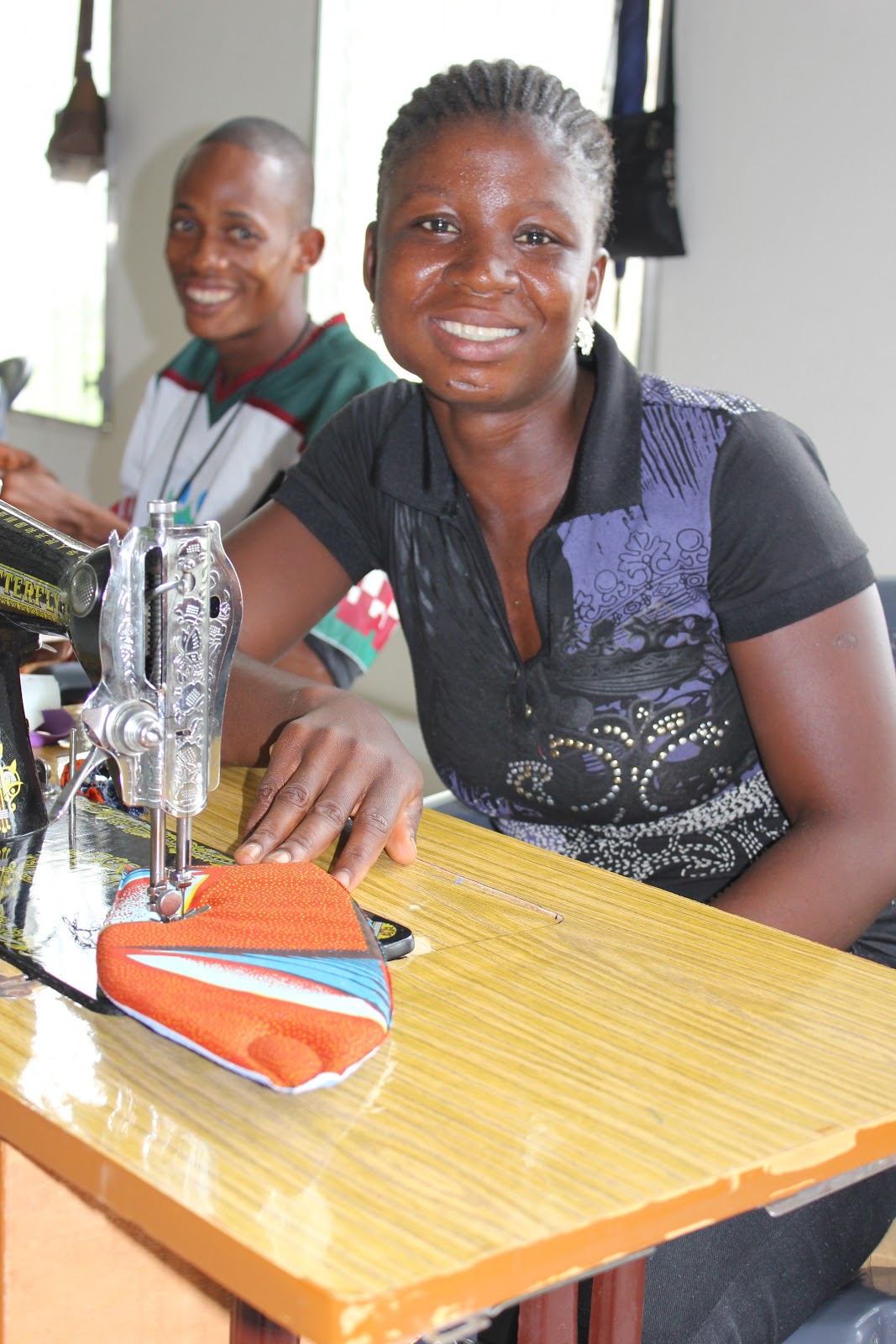
At Amani, Esther cuts cloth or learns to sew. She has only been at Amani for about a month but already feels intense community amongst her coworkers. “We are here together, friendly...if I am not here, I am missing these people,” she says, looking about the room.

After work, Esther often goes to night school, where she is currently completing 9th grade. Her favorite part about school is reading “They got some good stories in it!” she says of her school books, then rattles off the plot of a story she is reading this week about some farmers with a car---“their own car!”---she exclaims.

Esther


Regina
Regina, 33, wakes up at 4am each day. She makes breakfast for her family and walks “a looong time” to gather clean water. She bathes her 3 children and sends them off to school.

“Then I will go to the market to buy food, then I dress, and come to work.”

Regina usually cutes cloth, but is a highly capable seamstress who is rapidly learning to master new products each day, which she lists on her fingers with satisfaction:  “I make hot pad, coaster, belt, napkins, and placemat.”
In addition to developing lifelong sewing skills each day, Regina is earning income for her family. “I love Amani---Amani is helping me, I am getting money to send my children to school. I want for Amani to continue so I get work to do every day.
Regina


Yei
Yei, 20, wakes up at 4am, “and I work on small-small things” like cooking and cleaning. She baths her children and cooks. After arriving at Amani, she begins to produce a variety of products. One of the most complicated pieces Yei makes is what she calls teddy bears, a blanket term used here for stuffed animals (Amani’s “teddy bear” is actually an elephant backpack for children).

“I learned to sew at Amani. I also have a machine at home, and I make skirts.” Yei says.

Yei is very thankful for her job at Amani, which has come to prove essential to her young son’s future. When asked where her bi-monthly paycheck goes, she explains with an air of gentle determination. “I will do good things with it, like pay for my child’s school.”

Yei


Darlene
Darlene, 27, wakes up at 5:30am each day. “I clean my room, I put hot water on, bathe my daughter and find breakfast for her, then send her to school.

“After that, I will get ready, and put my market down (sets it up).” Her market stall sells cosmetics, shoes, clothing, and other odds and ends.

Darlene’s family has adjusted to every curve ball life has thrown at them. Her mother was unable to care for her two little sisters, so both live with Darlene and her husband. When Darlene comes to Amani, one sister tends to her market stall while the other goes to school. In the afternoon, the two trade places.

Darlene started her market stall with a $100 loan from Amani Liberia over a year ago, which she promptly paid back and has now increased ten-fold. She has plans to expand into an appliance shop soon.

Clearly, Darlene is already a savvy businesswoman, and has the perfect skill set to train as the manager for Amani Liberia’s Café, which is currently under construction. Darlene is learning many useful tasks at Amani, further broadening her already considerable resume. Some tasks are easier, like cutting, but some are challenging. “Working here requires learning,” says Darlene. She seems happy to meet the challenge.

Darlene

To see Ophelia, Felicia, and Theresa's stories, click here.
11.18.2012

A Typical Day for an Amani Liberia Woman: Ophelia, Felicia, and Theresa


Ophelia
Ophelia, age 30, takes a break to breastfeed her one-year-old son, Wilson, who glances up, smiles, and gets down to the business of eating. “I wake up at 4 o clock. I bathe my five children, I bathe myself, I make hot water for cooking.”

Ophelia walks to work each day from her home in Camp Four, a community in Yekepa several miles from the Amani center.  It takes her about two hours to walk the distance, which she manages with Wilson strapped on her back.

Ophelia is one of Amani’s most talented seamstresses, which is more impressive when you learn she can work on the machine while simultaneously wrangling a very inquisitive son. Ophelia is one of the first to arrive and last to leave Amani each day, where she churns out an astonishing number of folded totes and other products---all between Wilson’s frequent feedings.

When Ophelia gets home in the evening around 6pm, she is happy to say that she can unwind rather than cook; her 10-year-old daughter is in charge of dinner.

Ophelia takes a break to give Wilson a bath

Felicia
Felicia, 24, wakes up each day around 5am. She prepares water and uses a bucket to bathe herself and her four boys, and then sends them off to school. She prepares the meal her children and husband (a student at ABCU) will eat for dinner that night and heads to Amani.

Currently, Felicia works as a cloth cutter, “but I want to learn tailoring also!” She exclaims. Felicia has begun attending Monday sewing lessons.

Anyone who asks about favorite hobbies will get a similar answer when talking with the Amani members; they love to sing. Felicia, however, says that though she loves music and singing, “I don’t have a good tune”. For entertainment, Felicia has a different response: “I love to play football!” She learned to play when she was young and plays with the children often.

Felicia

Theresa
“I wake up at 5am and get some water on the fire for a bath for my husband and children.” Then Theresa’s two older children go to school and her husband departs for a nearby university where she hopes to attend if she can find a scholarship. “And then I sometimes go to the market, maybe to buy coal to cook with. Sometimes I plait my baby’s hair.”

Theresa never stops radiating a humble smile during her interview as she explains that she cuts cloth most days at Amani. She also helps with miscellaneous tasks, such as copying down prayer requests during daily devotionals. She is a quiet, intelligent leader at Amani, and shows incredible potential for a management position.

Theresa’s older children come into Amani after school and spend the rest of the day with their mother before walking home together. “Then I go home and get some rest for the following day,” she says, still smiling graciously.

On the weekend, Theresa does not remain idle; instead, she is constantly working hard to stretch her family’s resources. “Saturday, I will be working in the garden, planting greens or bitterball---you know, for the soup, because I cannot be paying money everyday to buy soup!” she exclaims.
Theresa completes her responsibilities merrily, entertaining herself along the way with music. “I love to sing and listen to the radio.”

Theresa

9.28.2012

Before & After---Amani Liberia's Building


Feet peddle on sewing machines, babies giggle, and voices hum. Amani Liberia is in full swing.

The building still lacks electricity, but tall windows span almost the entire length of the wall, so even in Liberia’s overcast rainy season, the seamstresses and tailors have plenty of clarity.

Amani Liberia
Amani Liberia has transformed this war-torn shell into a beautiful building. Or---as Liberians say---a “fine” building.

When asked what she thought of the improvements at Amani Liberia center, Patricia, age 27, shares enthusiastically that, “The building was ugly before, but now, its fine!”

“Fine, fine, very fine,” echo the other members.

The building was nothing but concrete floor and walls a few years ago. During the war, most structures were abandoned, and anything of value was promptly pilfered off. This building, a former arts and crafts center, was stripped of its roof, flooring, and plumbing.

If you take a tour around the community, you find that this is not an uncommon fate for any of the structures. Before the war began, Yekepa was on it’s way to becoming something of a resort town that catered to the mining company here. There was even a country club equipped with a pool and tennis courts. Now, the streets are lined with roofless ruins, picked clean of any value, housing only a collection of tropical plants.

But there is progress and healing in the community as well, something the Amani Liberia members have been a part of through the building's transformation.

Teresa, a mother of three, points to the tiled wall on one end of Amani. “When people come in, they will see these designs and think, that looks beautiful."

“Soon we will be on the current (able to use electricity), and it will look even better, all of the lights will be on,” says Annie, gesturing up to the bulbs.

In addition to electricity, the center now has a roof, windows, doors, a bathroom, and running water, all installed by Amani.

But Regina, 33 and mother of three, finds a deeper meaning in the building’s beauty. While cutting fabric for the lining of a purse, she explains that she, like most Liberians, was unable to attend school during the war. To do this she needed a job, a tall task when you live in a country whose unemployment rate is a staggering 85%.

“When I found out about what was happening in this building, I came, because I wanted my boys to go to school and finish my education. I am now in the seventh grade,” She beams.

Regina on her birthday a few weeks ago.
Though she has to stand near a window for sufficient light, Regina is able to trade her hard work for a paycheck.

The Amani Liberia members can think of only one complaint when asked about their “fine” building: The white tiled floor. “It’s too white, we can’t keep it clean!” exclaims Annie.

Before Amani's construction, the structure had no roof
The doorless, windowless structure before construction began
Construction at Amani Liberia

Amani Liberia and many of the members earlier this month


8.09.2011

Production is in full swing at Amani Liberia!

August in Liberia means the beginning of the rainy season, but a little rain won't stop Amani Liberia!


Amani workspace buzzing with activity.
Everyone hard at work cutting and stitching.
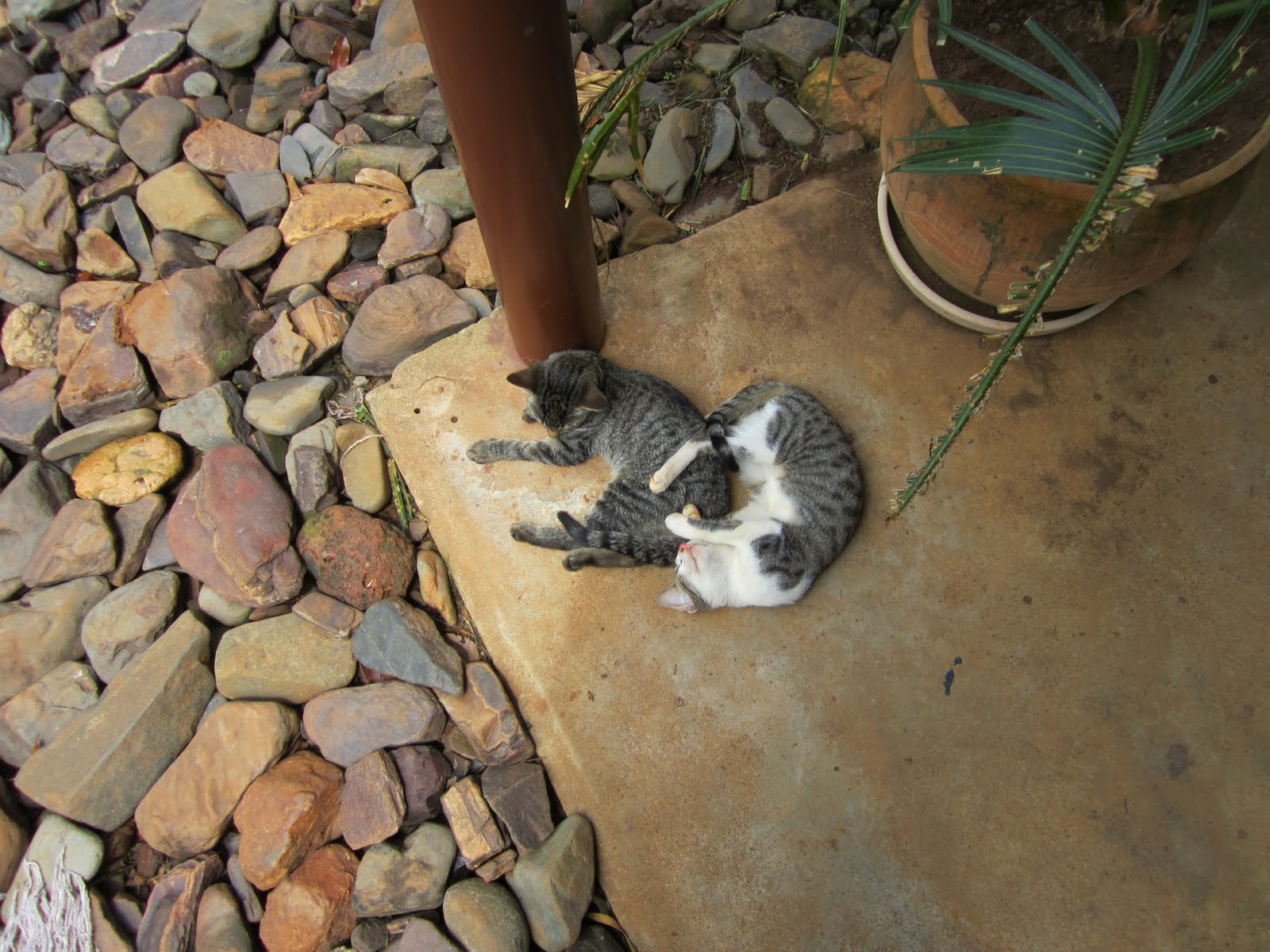
...except for the cats.
So many scraps - every quilter's dream!
Felicia, now an experienced cutter, cutting placemats.
Just about anything can be used. Coming soon: Amani Laptop Cases!
Manager Famata delivers a stack of new Lappa fabric purchased during a recent trip to Guinea.
The design possibilities are endless for these new Lappa pieces!
Abaku, one of Amani's suppliers of Lappa.
Intern, Hannah, working with Felicia. Felicia can cut ten sets of coasters in one day - Each set includes six coasters, and each coaster is made of four pieces of fabric. That's 240 pieces cut in one day!

3.22.2011

Value of a Pin


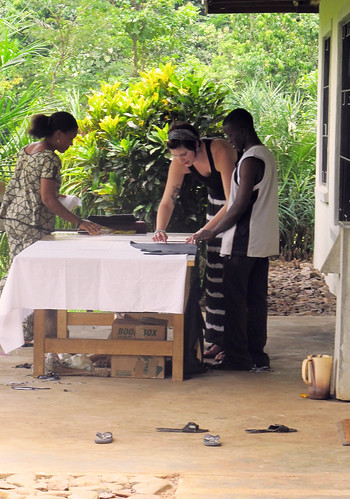
IMG_1149


Hannah, one of the Amani designers from California, was making a pattern today and requested supplies for cutting the fabric.  Famata, one of the Amani ladies, who is quickly showing her talent as a manager, gave Hannah a pair of scissors and exactly three pins. Once Hannah was finished using the materials she gave back the scissors and only two pins. The Amani manager gently reached over Hannah and picked up the third pin, beautifully demonstrating her integrity in every aspect of her work with Amani Liberia.